HZM Cloud is a unified platform to deploy apps, publish websites, manage storage, control domains, and automate infrastructure from one place.
You run it as a self-hosted panel on infrastructure you control. Native Android and iOS build and release flows are on the roadmap; deployments, sites, storage, and domains are what you wire up in the panel today.
Deploy apps · Publish sites · Store files · Map domains · Automate rollouts — one workspace vocabulary, not a pile of unrelated consoles.
What you actually do here
You deploy backends and workers, publish web apps, move files through storage, point domains at the right project, and wire secrets and logs in one place. Mobile release workflows join the same map as they ship.
Deploy apps & services
Run APIs, workers, background jobs, and long-lived services with project-scoped environments and deployment workflows.
Publish websites
Ship static sites, dashboards, storefronts, and modern web frontends with hosting and routing aligned to your projects.
Store & deliver files
Manage uploads, media, and assets with storage workflows and fast delivery patterns suitable for product-grade workloads.
Control domains
Map custom domains, subdomains, and routing decisions alongside deployments so traffic lands where you expect.
Mobile releases (roadmap)
Build metadata, queue pipelines, and distribution-style workflows for Android and iOS are rolling out as first-class modules.
Teams that want one control plane for deployments, sites, storage, and domains — with a clear path to native mobile releases.
- SaaS teams shipping web and API products
- Agencies managing multiple client projects
- Internal platform and DevOps groups
- Organizations that need self-hosted control
Same surface. Clear boundaries.
Each module answers a concrete job — deploy, publish, store, route, observe — so newcomers understand what they can do first, then how deep they want to go.
Deployments
Ship and operate services, APIs, and workers with project-aware rollout and environment separation.
Web hosting
Publish static sites, SPAs, and server-rendered apps with routing and previews aligned to your workspace.
Storage
Store objects, media, and build artefacts with delivery-oriented workflows suitable for production traffic.
Domains
Attach custom domains and subdomains, then route them to the right project surface without guesswork.
Databases
Provision and attach managed databases to projects with clear boundaries between environments.
Logs & monitoring
Centralize logs, health signals, and operational visibility so incidents are easier to trace.
Secrets & env
Keep configuration out of source control with scoped secrets and environment variables for each target.
Mobile build & release
Queue builds, track targets, and prepare Android / iOS delivery flows — expanding as the mobile engine matures.
Product map
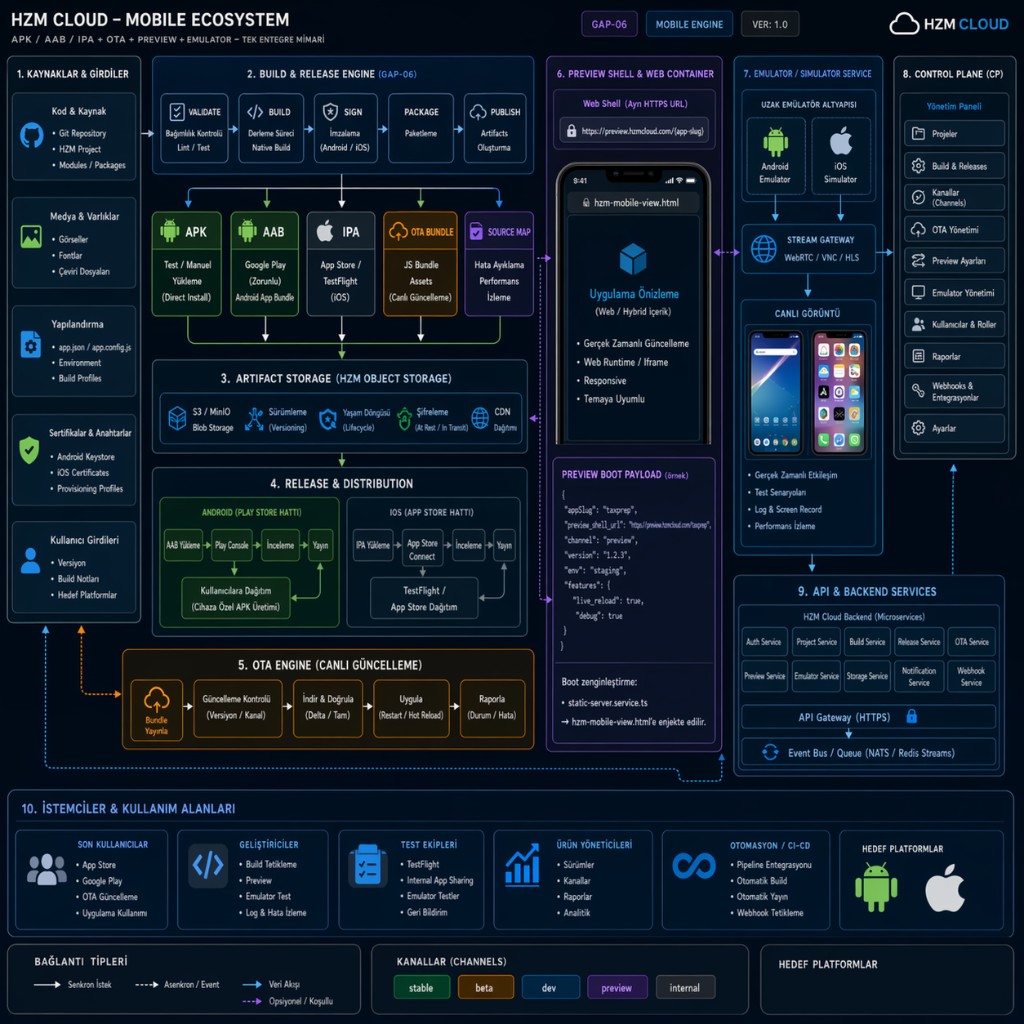
Mobile ecosystem (target architecture)
Placed after the module grid so the mobile roadmap tile leads into the full target stack: native builds, store lines, OTA, preview, emulators, control plane, and APIs. Images load from same-origin /marketing/ unless NEXT_PUBLIC_MARKETING_STATIC_BASE_URL points to your static host (for example nginx on the server).

Familiar jobs, one product language
You deploy services, publish sites, attach storage, map domains, and manage secrets and logs from one panel. The same jobs you would spread across separate tools are grouped here so operators trace changes without rebuilding a mental model per vendor.
Self-hosted: deploy services, publish websites, manage storage, route domains, then add native Android and iOS release workflows as those modules land.
One map, many jobs
Deployments, web surfaces, storage, domains, and (soon) mobile pipelines are described in the same vocabulary so teams do not rebuild mental models per tool.
Self-hosted control
Operate on infrastructure you govern while still getting a cohesive product experience — important for regulated industries and long-lived platforms.
API-first surfaces
Automate provisioning, builds, and rollouts through documented APIs instead of clicking through opaque hosted consoles.
Operational clarity
Projects, environments, secrets, and logs stay scoped so operators know where state lives and how to trace a change.
Built for multi-project teams
Whether you run one flagship product or dozens of client workspaces, the control plane stays consistent — fewer bespoke runbooks.
From blank workspace to running surfaces.
You stay inside one control plane while the platform separates concerns: deployments, publishing, storage, domains, and observability. Mobile release tooling follows the same pattern as those modules mature.
Product shape, not marketing metrics
These counts describe how the platform is organized — not live global traffic. They stay static so the page stays honest in crawlers, screenshots, and first paint.
Start building on HZM Cloud today.
Spin up a workspace, connect your first project, and route traffic through the same control plane you will use for mobile releases as those modules land.